TOOL COLLECTION · CONCEPTS

Match the test
to the uncertainty.

Compare four research platforms by study format, participant access, and the evidence you need from a concept or prototype.

By Vellora Labs · Reviewed October 10, 2026

A concept can be a short description, visual, storyboard, or interactive prototype. Choose the stimulus that exposes your uncertainty. Click behavior helps investigate a task; an explanation in the participant’s own words helps investigate meaning. Neither automatically proves demand.

Selected for different jobs, not ordered by traffic or scored in hands-on tests. Capabilities below come from official pages checked October 10, 2026. Verify current plans, limits, and terms with each provider.

Study needCandidates to examinePilot question
Combine research methods around a product decisionMaze or LyssnaCan the exact stimulus and follow-up be presented as intended?
Observe reactions to a concept or experienceUserTestingDoes the recording preserve the context of the response?
Test a task or structured design questionUseberryWhich interactions and observations are available for this stimulus?
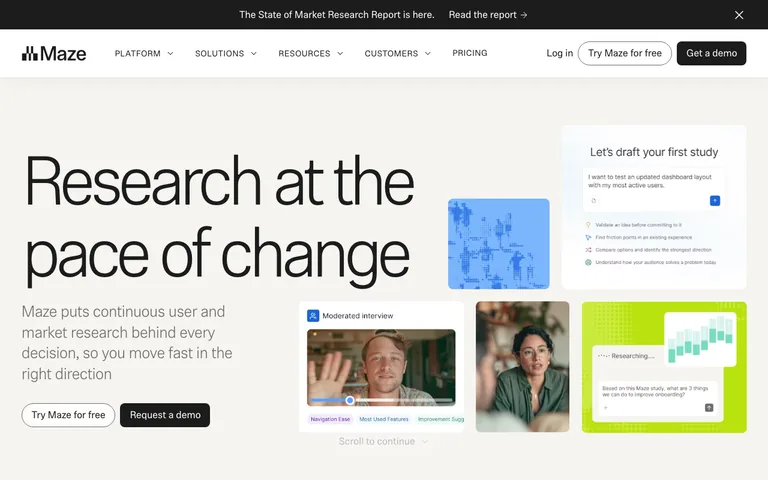
Maze official website homepage screenshotActual official websiteCaptured 2026-10-07

MULTI-METHOD PRODUCT RESEARCH

Maze

Maze describes research for ideas, prototypes, messaging, and customer needs, including moderated interviews and prototype testing. Its homepage also lists participant recruitment and AI assistance. Consider the method you need before selecting a study configuration.

Before choosing: Pilot the exact prototype or concept format. Confirm audience sourcing, task setup, exports, and which parts of the workflow your chosen plan includes.

Official website →
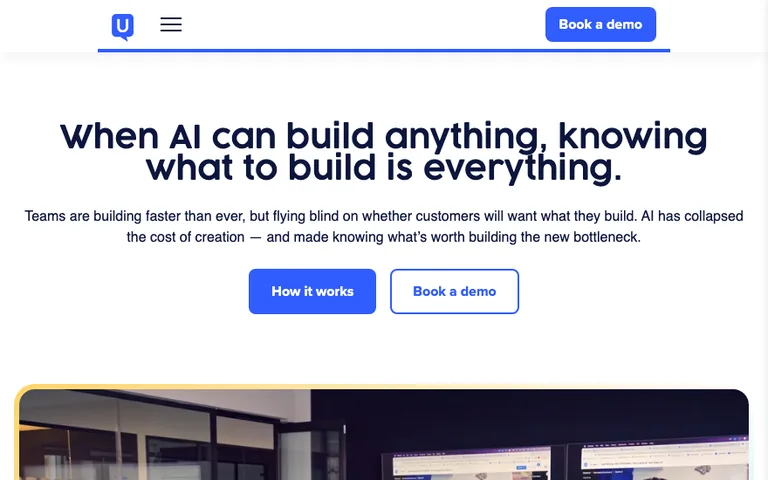
UserTesting official website homepage screenshotActual official websiteCaptured 2026-10-07

HUMAN FEEDBACK ON EXPERIENCES

UserTesting

UserTesting describes a platform for gathering feedback from people on concepts, prototypes, and live experiences. It also highlights access to participants. Consider it when a reaction needs to be understood in the context of a person’s interaction with an experience.

Before choosing: Check the session format, stimulus compatibility, participant criteria, and what raw material you receive. Do not treat a polished highlight reel as the entire research record.

Official website →
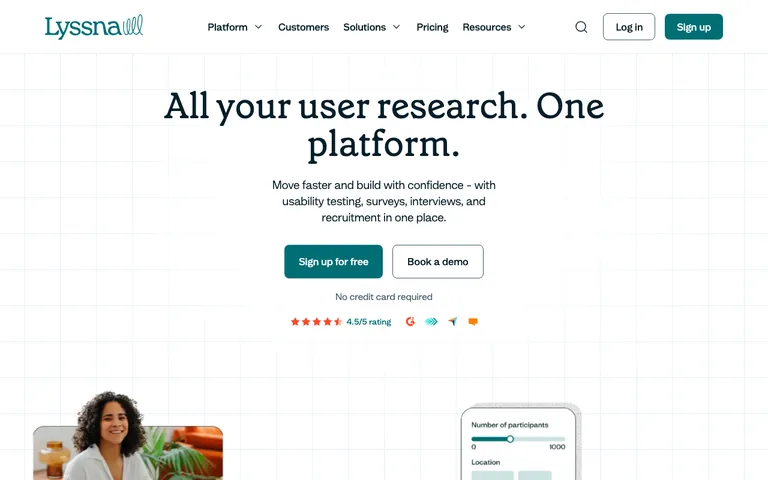
Lyssna official website homepage screenshotActual official websiteCaptured 2026-10-07

TESTS, SURVEYS AND INTERVIEWS

Lyssna

Lyssna describes usability testing, surveys, interviews, and recruitment in one platform. Its study workflow includes creating a study, finding participants, and sharing results. It is a candidate when your research needs a combination of structured responses and follow-up methods.

Before choosing: Check how the relevant method handles timing, presentation order, open responses, and participant sourcing. Try the study on the devices your audience will use.

Official website →
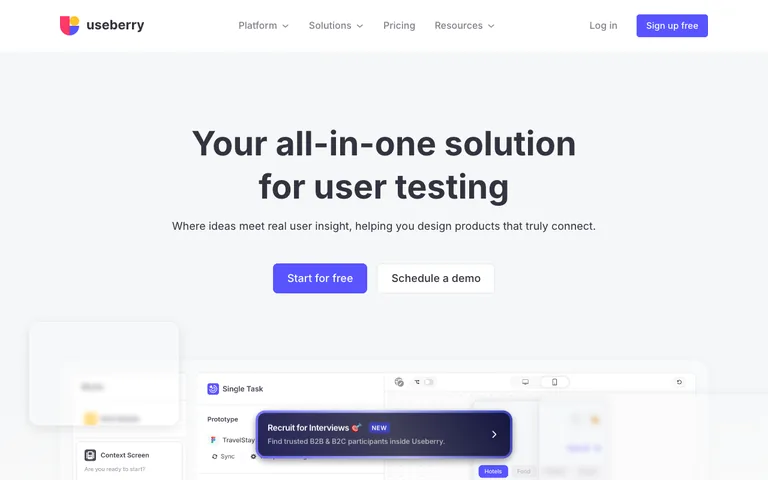
Useberry official website homepage screenshotActual official websiteCaptured 2026-10-07

DESIGN TASKS AND RESEARCH BLOCKS

Useberry

Useberry lists first-click, five-second, preference, single-task, survey, and other research blocks. It describes prototype and live-website imports, participant recruitment, and live interviews. Choose a block based on the observation you need, rather than the metric easiest to collect.

Before choosing: Check the imported design, recording behavior, task completion criteria, and sample source. A preference result and task completion answer different research questions.

Official website →

Use the same pilot brief across providers.

Prepare a concept version, participant criteria, a neutral introduction, one comprehension question, one relevant task, and a follow-up. This lets you compare whether the workflow supports your study without pretending you have benchmarked each provider’s research quality.

Keep four things in the evaluation record.

  1. Stimulus fidelity: what actually loaded, including device and playback issues.
  2. Audience: where people came from, how they were screened, and who is missing.
  3. Evidence: the original response or action and how it connects to a reported finding.
  4. Operational fit: access permissions, export format, storage, retention, and the full study cost.

Choose a provider after the pilot and a review of its current terms. These listings deliberately make no numerical quality, price, or traffic ranking.

Use the downloadable concept-test script for a moderated pilot. The concept-testing workflow explains how to interpret the result; the budget calculator makes your planning assumptions explicit.