TOOL COLLECTION · INTERVIEWS

Choose how to listen.
Then choose the tool.

Compare recruitment support, AI-moderated interviews, and asynchronous forms by the research job they perform.

By Vellora Labs · Reviewed October 10, 2026

Start by separating recruitment, interviewing, and collecting written answers. They produce different evidence and do not replace each other. A recruitment service helps find people; an interview needs a guide and probing; a form collects responses without a live conversation.

Selected for different jobs, not ordered by traffic or scored in hands-on tests. Capabilities below come from official pages checked October 10, 2026. Verify current plans, limits, and terms with each provider.

Your immediate needStarting pointEvidence to expect
Find people with relevant experienceUser InterviewsRecruited participants; the interview still needs a method
Conduct conversations with AI follow-upsListen Labs or OutsetInterview responses to review against the original exchange
Collect written screeners or short answersTallySubmitted answers; no live clarification by default
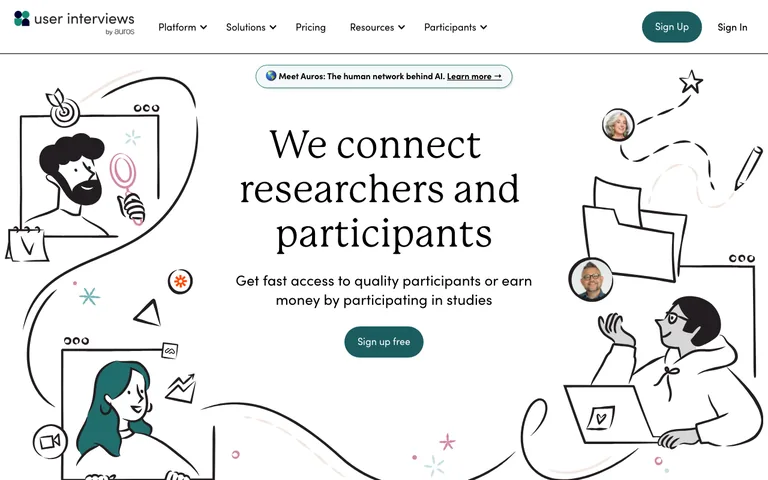
User Interviews official website homepage screenshotActual official websiteCaptured 2026-10-07

PARTICIPANT RECRUITMENT

User Interviews

User Interviews describes recruitment from its participant audience and tools for working with your own users. Consider it when finding suitable people and coordinating recruitment are the immediate bottleneck. Keep responsibility for the study design and interpretation with your team.

Before choosing: Check target-audience availability, screening review, incentives, scheduling, and what the quoted study includes. A booked participant is not yet a usable interview.

Official website →
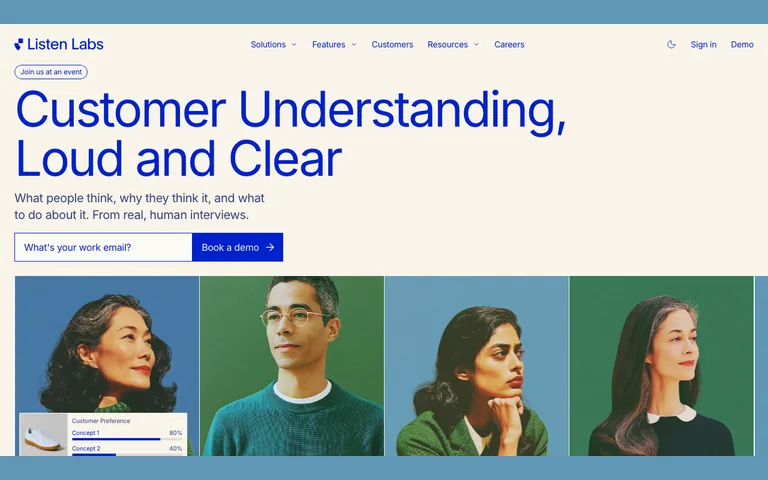
Listen Labs official website homepage screenshotActual official websiteCaptured 2026-10-07

AI-MODERATED RESEARCH

Listen Labs

Listen Labs describes a workflow spanning study design, participant reach, interviews, and deliverables connected to interview material. Consider it when you have a bounded question and want to review AI-led conversations across participants.

Before choosing: Pilot the guide with realistic answers, interruptions, and ambiguity. Ask to inspect the underlying exchanges and check whether important findings can be traced to them.

Official website →
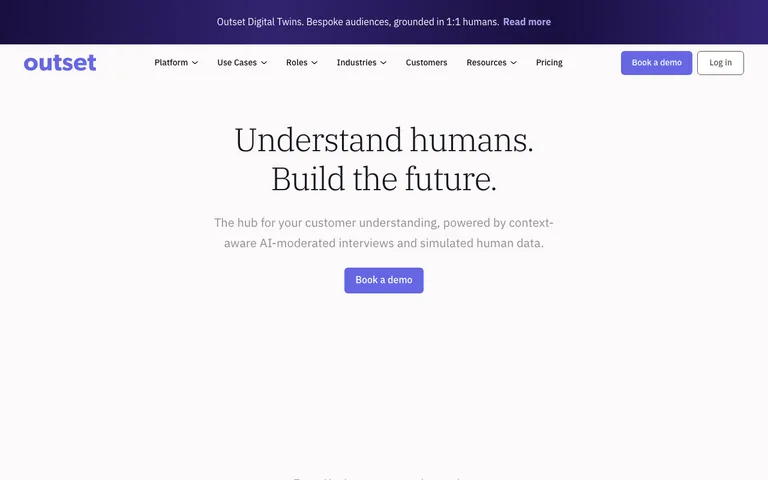
Outset official website homepage screenshotActual official websiteCaptured 2026-10-07

AI-MODERATED RESEARCH

Outset

Outset describes AI-moderated interviews over video, voice, and text, alongside recruitment and analysis. Its website also describes a separate Digital Twin Research capability. Treat answers from simulated respondents as a different source from interviews with real participants.

Before choosing: Ask which mode a study uses and how each response is labeled. Keep simulated material separate in the evidence log; do not count it as an additional customer interview.

Official website →
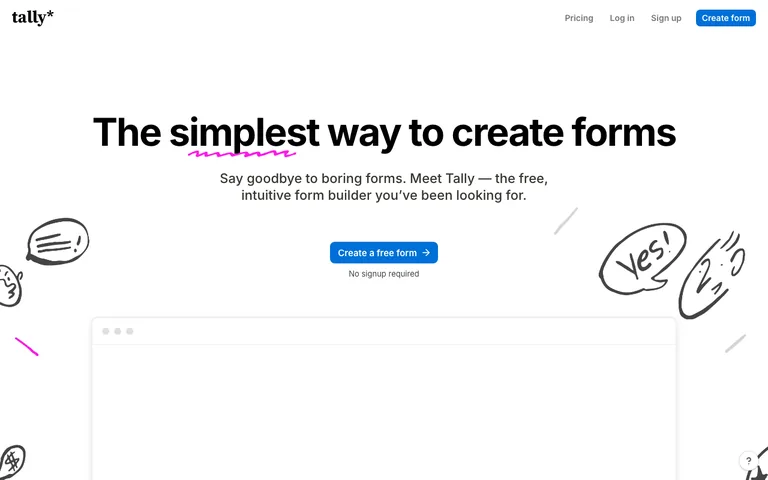
Tally official website homepage screenshotActual official websiteCaptured 2026-10-07

ASYNCHRONOUS FORMS

Tally

Tally provides a form builder with conditional logic and several answer types. It can support a recruitment screener or collect written context before a session. A submitted form is an asynchronous response, even if it contains open questions.

Before choosing: Pilot branching and incomplete answers. Check response handling and retention. If an answer needs probing, plan a follow-up conversation rather than inferring what the person meant.

Official website →

Human moderator or AI moderator?

If the topic is unclear, emotionally sensitive, or depends on a complex demonstration, consider starting with a researcher-led pilot so you can adapt the guide. If you use AI moderation, inspect how it handles uncertain answers and whether it moves on too early. These are selection criteria to test, not claims that one approach is always better.

A practical evaluation task

  1. Write one decision and a neutral six-question guide.
  2. Run a pilot using a consenting participant and a realistic task.
  3. Check the original exchange: did the moderator clarify a contradiction or simply summarize it?
  4. Compare the exported finding with the supporting words, context, and missing evidence.
  5. Document consent, recordings, retention, and what you can export before expanding the study.

Keep recruiting criteria distinct from the questions used to learn. Start with the screener builder, then create an interview guide. After sessions, use our evidence-to-story workflow to avoid turning one quote into a broad product promise.