TOOL COLLECTION · RECRUITMENT

Find relevant people.
Check the fit.

Compare recruitment workflows by the audience and study you actually need.

By Vellora Labs · Reviewed October 12, 2026

Participant recruitment has several jobs: finding people with relevant experience, checking study fit, scheduling participation and administering incentives. Choose a service against those jobs before comparing panel size or a headline speed claim.

Official pages checked October 12, 2026. These are published workflow descriptions, not a hands-on quality test or traffic ranking. Confirm audience feasibility, current pricing and policies directly. A recruitment service does not replace your research method.

NeedWhat to investigate
Reach people outside your customer basePanel coverage for the exact role, activity and location; expected screening burden.
Recruit existing customersPermission to contact, contact rules, scheduling and panel management.
Specialist experienceWhat verification checks cover and what your screener still needs to establish.
Predictable operationsNo-shows, replacement eligibility, incentive handling and complete fees.
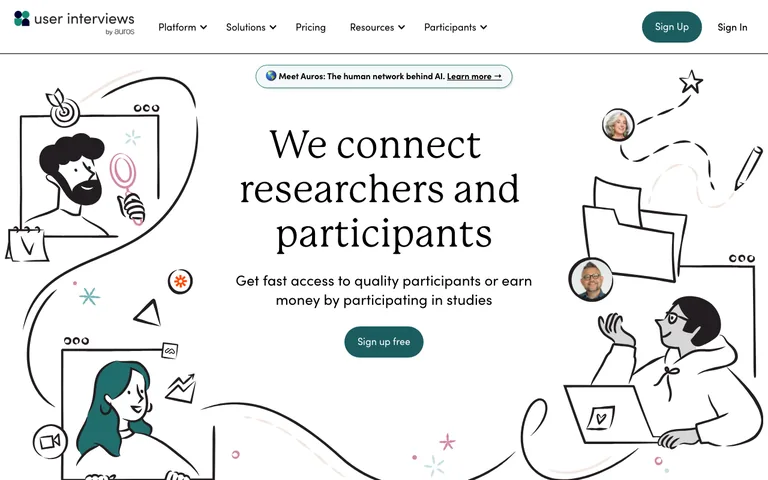
Actual User Interviews official website screenshotActual official websiteCaptured 2026-10-07

PARTICIPANT RECRUITMENT

User Interviews

User Interviews describes recruiting through its panel, your own panel, or both, with screening, scheduling, incentives, consent and contact rules. It is a candidate when you need to coordinate recruitment across external audiences and existing users.

Before choosing: Check which workflow and plan cover your audience. Ask how repeated contact, scheduling conflicts, incentives and eligibility review are handled.

Official source →
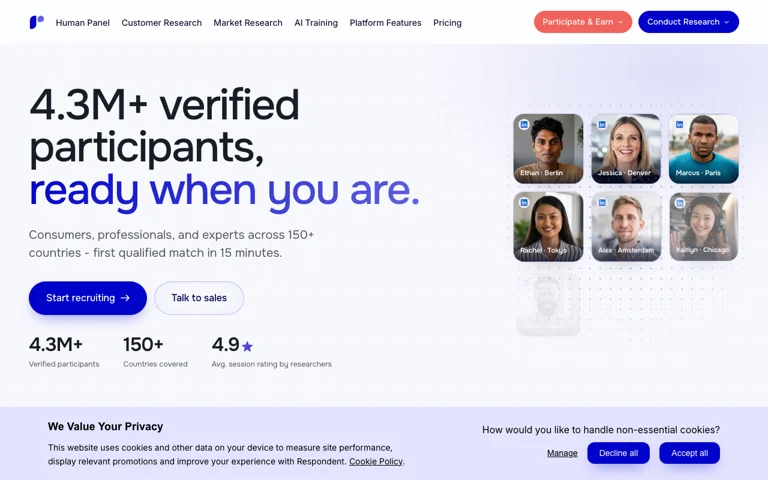
Actual Respondent official website screenshotActual official websiteCaptured 2026-10-12

PARTICIPANT RECRUITMENT

Respondent

Respondent describes recruitment of consumers, professionals and subject-matter experts, with matching, screeners, verification information and managed recruitment options. Its homepage describes checks at different stages; verify what those checks mean for your particular study.

Before choosing: Ask what role or experience verification establishes, what you can inspect, and which replacement or refund terms apply. Identity verification alone does not prove relevant recent behavior.

Official source →

Use the same feasibility brief.

Specify the research decision, relevant behavior, recency window, language, location, duration, format and required access arrangements. Distinguish necessary eligibility from a convenient job title. Tell providers which criteria can change and which are essential to the study.

Request a cost breakdown that separates service fees, incentives and other charges. Record the expected scheduling window and what happens when a participant cancels, fails the screener or encounters a technical problem. A quoted estimate is not a guaranteed completion count.

A small recruitment pilot

  1. Review screener wording for hints about the desired answers.
  2. Check a small set of candidates for relevant recent experience and conflicting information.
  3. Confirm availability and access arrangements without treating accessibility support as ineligibility.
  4. Run the planned session and record whether the recruited experience matched the task.
  5. Review no-shows and mismatches against the provider’s actual policy before expanding.

Write down the limits of your pilot. Do not turn a few successful recruits into a platform-wide quality score. Do not repurpose participants’ quotes or profiles for public marketing without the relevant permission.

Prepare the study before the invitations.

Use the screener builder, a study plan and the budget calculator. After an interview, make a source-linked record with the debrief builder. If the study tests a product explanation, prepare the video brief first. TapVid is our team’s video creation product, not a recruitment service.